
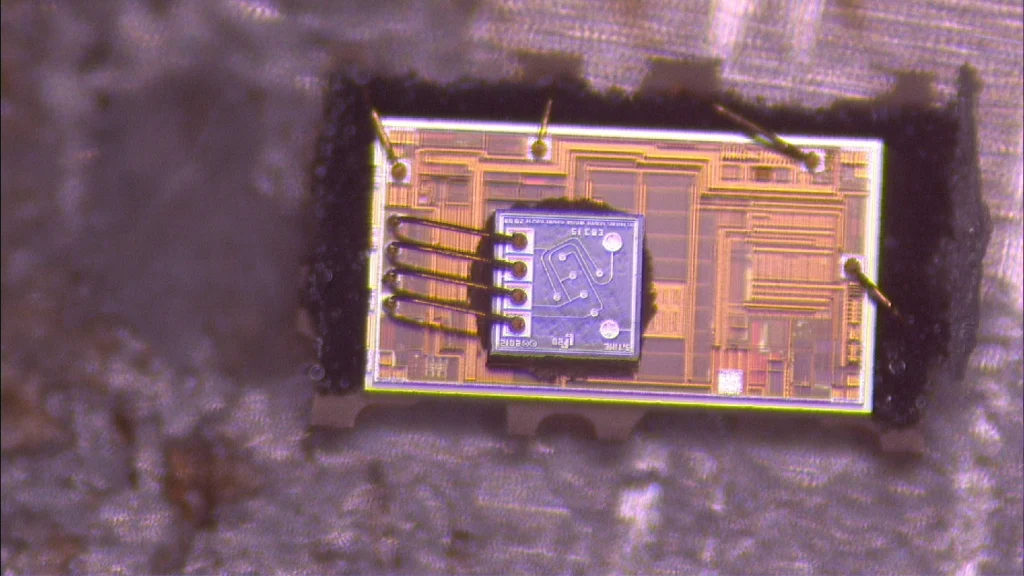
Sample and analysis objective
When the target includes a thin aluminum layer and surrounding structures, define the metal areas to preserve, permissible surface changes and required follow-up measurements in advance.
| Item | Case information |
|---|---|
| Material of interest | Thin aluminum layers and related metal regions |
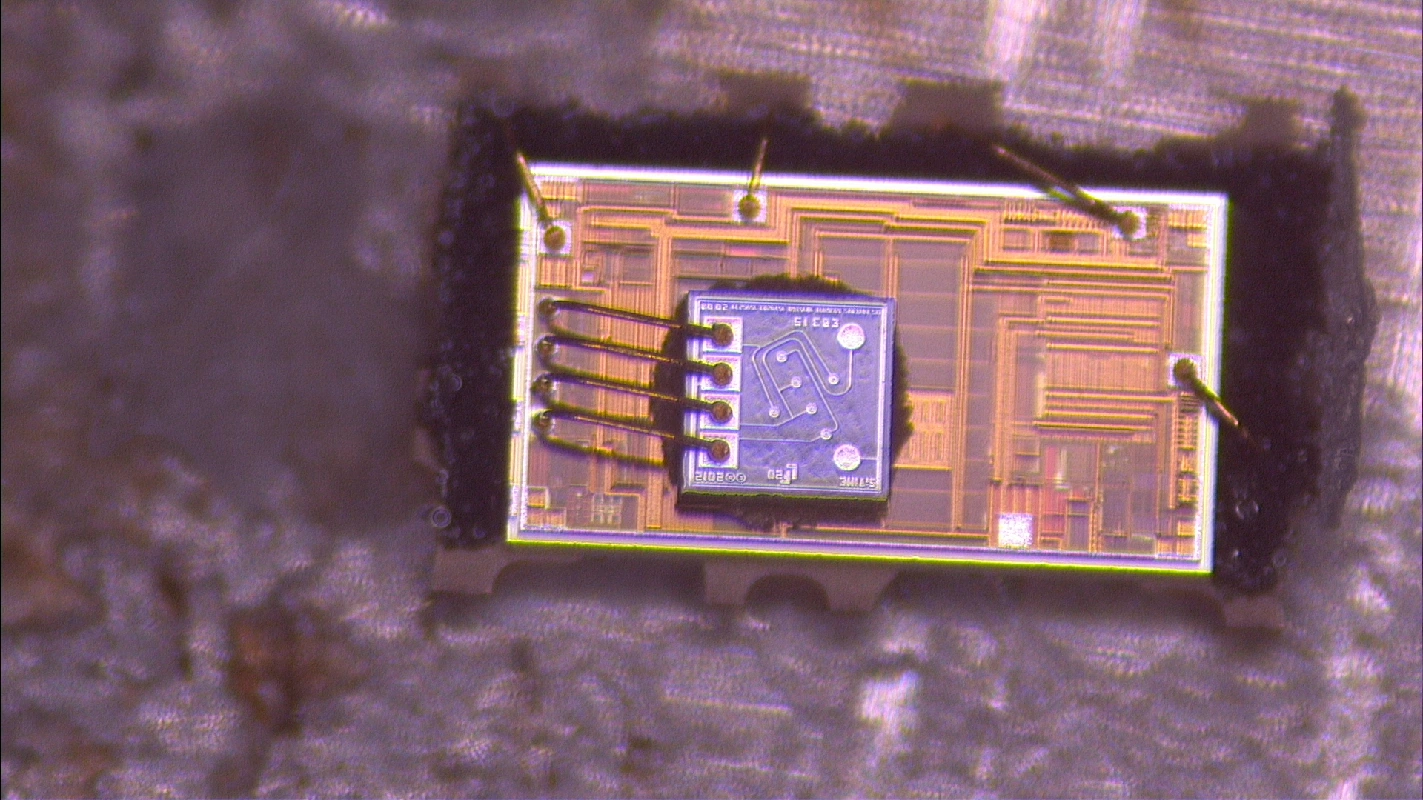
| Image record | Microscopy after decapsulation |
| Further verification | Metal surface condition and necessary film-thickness and electrical measurements |
Processing record
The source image supports observation of the die surface and bonding region. No aluminum thickness, before-and-after thickness change or electrical change is provided, so material loss cannot be quantified from it.
Actual sample images
Result review priorities
- Inspect target surfaces at consistent magnification and illumination.
- If a metal-loss limit is required, add film-thickness or cross-sectional measurements.
- Evaluate surface observability and electrical preservation separately.