
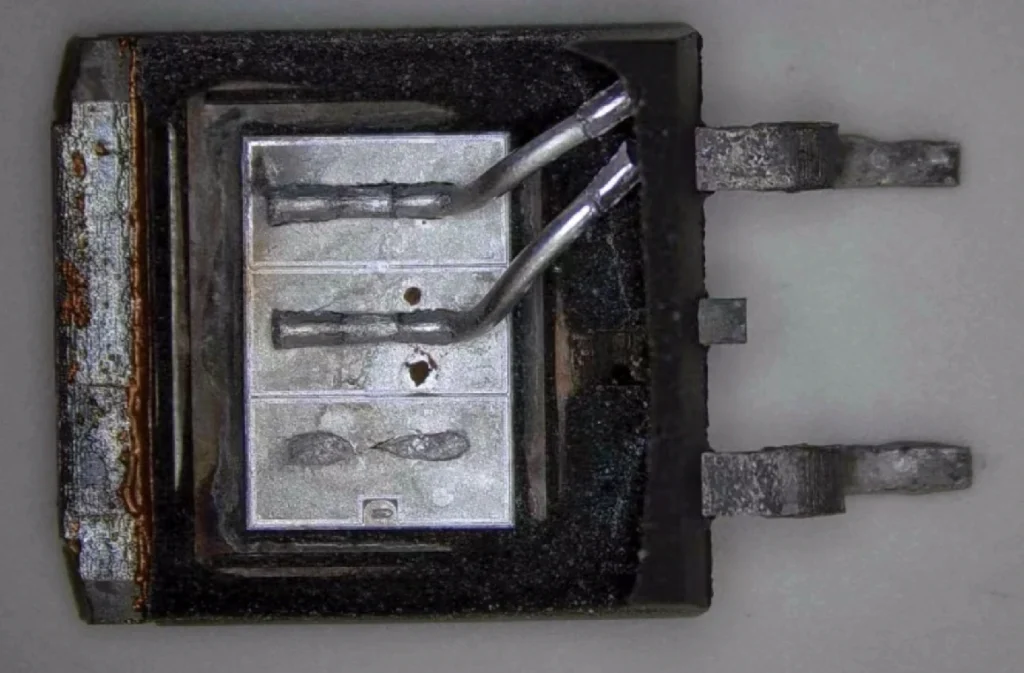
Sample and analysis objective
Failed encapsulation materials may respond differently from normal samples. Preparation must consider carbonized regions, die surfaces and bond connections together, avoiding further removal without intermediate records.
| Item | Case information |
|---|---|
| Sample condition | Failed samples associated with EOS carbonization |
| Observation targets | Die surfaces, bonding regions and local anomalies |
| Time and yield | No statistics provided in the source |
Processing record
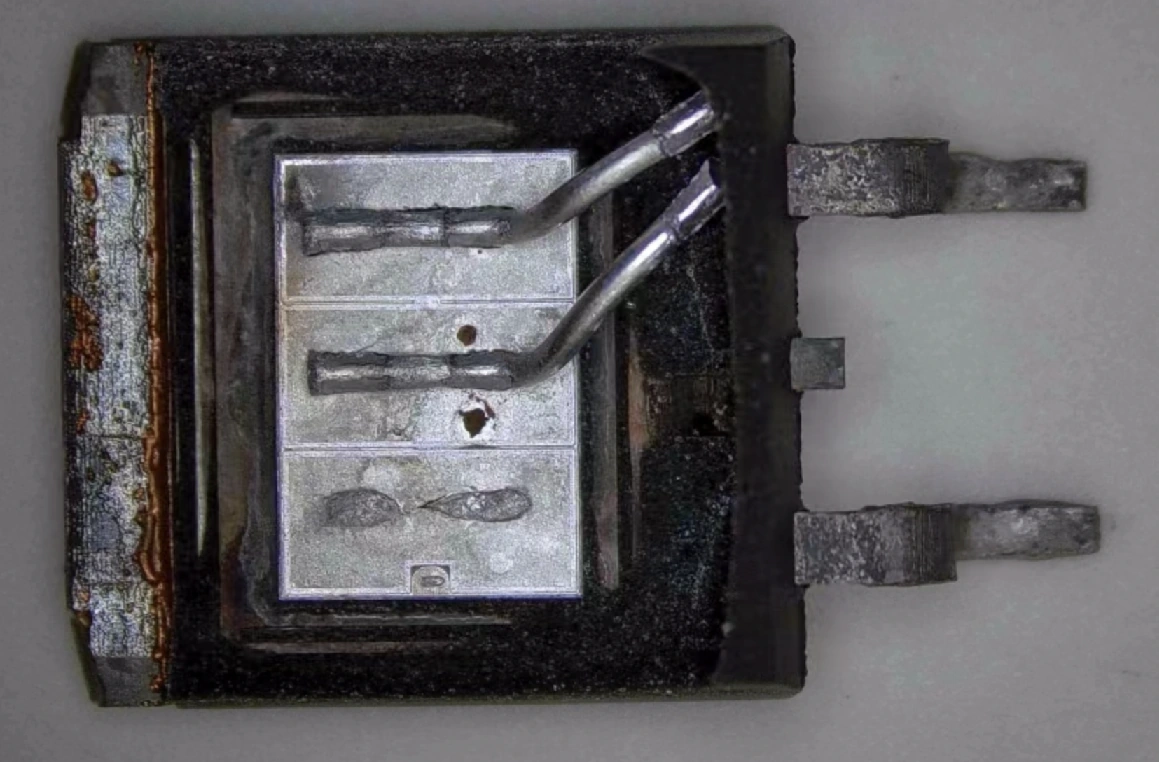
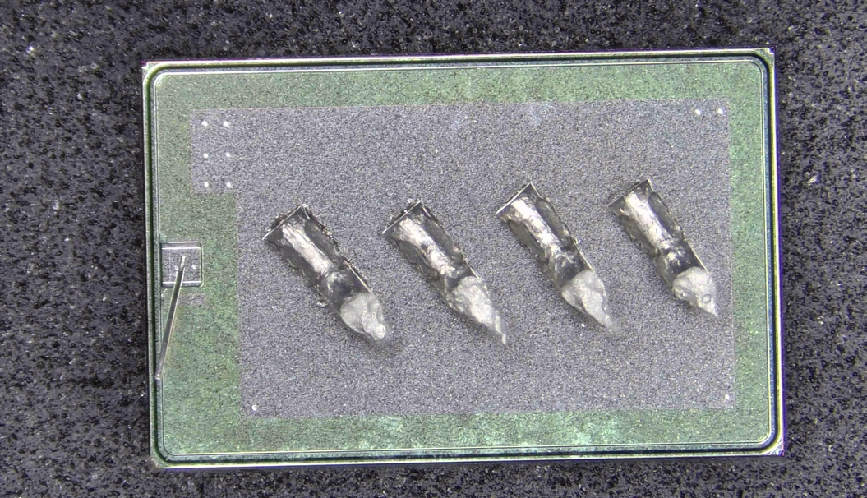
The source shows internal structures of a power package and a separate set of localized die-surface anomalies. These images are not a continuous before-and-after sequence of one sample and do not establish the order in which defects formed.
Actual sample images
Result review priorities
- Correlate electrical, X-ray or other available localization clues before preparation.
- Retain stage images to distinguish original failure evidence from potential preparation effects.
- Determine the cause of visual anomalies through further analysis, not color or morphology alone.